
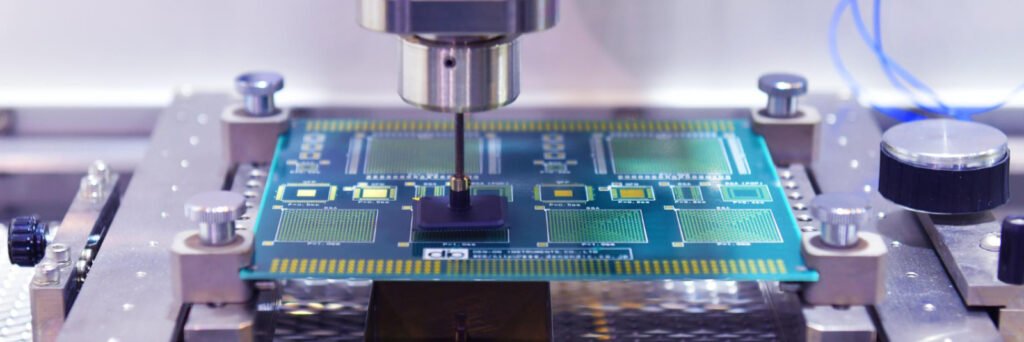
Behind every high-performance smartphone, microchip, and renewable energy grid lies a complex ecosystem of specialized chemicals. While hardware engineering captures the public eye, the electronics manufacturing industry relies heavily on ultra-pure chemical formulations, etchants, and specialized solvents to fabricate microscopic circuitry that powers our digital world.
What are Electronic-Grade Chemicals?
Electronic-grade chemicals are exceptionally high-purity substances synthesized to meet strict semiconductor manufacturing standards. Unlike standard industrial chemicals, these materials undergo advanced purification processes to reduce trace metallic impurities and particle counts to parts-per-billion (ppb) or parts-per-trillion (ppt) levels, preventing microscopic short circuits on silicon wafers.
What is Their Use?
- Silicon Wafer Etching: Selectively dissolving unprotected parts of a semiconductor substrate to carve out intricate micro-circuit patterns.
- Surface Cleaning and Preparation: Removing organic residues, ionic contaminants, and native oxides from printed circuit boards (PCBs) and microchips before assembly.
- Lithography Processes: Acting as photoresists and developers to transfer precise geometric patterns onto semiconductor chips using light exposure.
- Electroplating and Metallization: Depositing microscopic layers of copper, gold, or tin onto circuit boards to establish conductive pathways.
Key Benefits in Electronic Manufacturing
- Precision and Reliability: Prevents electrical leakage, signal interference, and device failure in high-density microchips.
- Miniaturization Support: Enables engineers to shrink billions of transistors onto a single silicon chip without losing structural integrity.
- Enhanced Thermal Stability: Protects sensitive internal components from overheating and environmental degradation during operation.
Essential Chemical Classes Used in Electronics
- Ultra-Pure Acids and Solvents: Hydrofluoric acid, Isopropyl alcohol (IPA), and electronic-grade acetone for wafer cleaning.
- Etching Agents: Ammonium fluoride and ferric chloride solutions used for PCB trace fabrication.
- Specialty Gases and Doping Agents: Silane and phosphine gases used for altering the electrical properties of silicon.
- Conductive Polymers and Pastes: Silver-filled epoxies used for micro-soldering and component bonding.